
25+
Years Of Experience
Laundry Appliances That Stopped Working Normally
Washer and Dryer Repair in Victoria and the crossroads area for machines that fail to start, drain, spin, heat, or complete a full cycle
A washer that stops mid-cycle with standing water in the drum or a dryer that runs a full timed cycle and leaves clothes damp creates an immediate, compounding problem for any household managing regular laundry loads. Appliance Pro provides washer and dryer repair for households in Victoria and the cross roads area, diagnosing the specific component or system failure before recommending any repair path. Because washers and dryers involve different mechanical systems—motors, pumps, control boards, heating elements, belts, and sensors—a symptom like "won't start" or "won't drain" can trace back to several different causes, and the repair only resolves the problem when the correct one is identified.
Washer problems that Appliance Pro evaluates include failure to start or advance through cycles, incomplete draining, no-spin or weak-spin conditions, excessive vibration during operation, and error codes displayed on the control panel. Dryer problems typically involve no heat or insufficient heat, drums that turn but do not tumble clothes effectively, failure to start, or extended cycle times that leave loads damp. South Texas humidity affects how dryer venting performs over time—restricted or partially blocked dryer vents are a regional factor that can mimic heating element failure by extending dry times without an actual component fault. A thorough diagnosis distinguishes between a venting restriction and a failed heating element, which keeps the repair accurate.
Arrange a service appointment for your washer or dryer by contacting Appliance Pro with the appliance type, brand, and the specific behavior you are observing.
What Proper Laundry Appliance Repair Requires
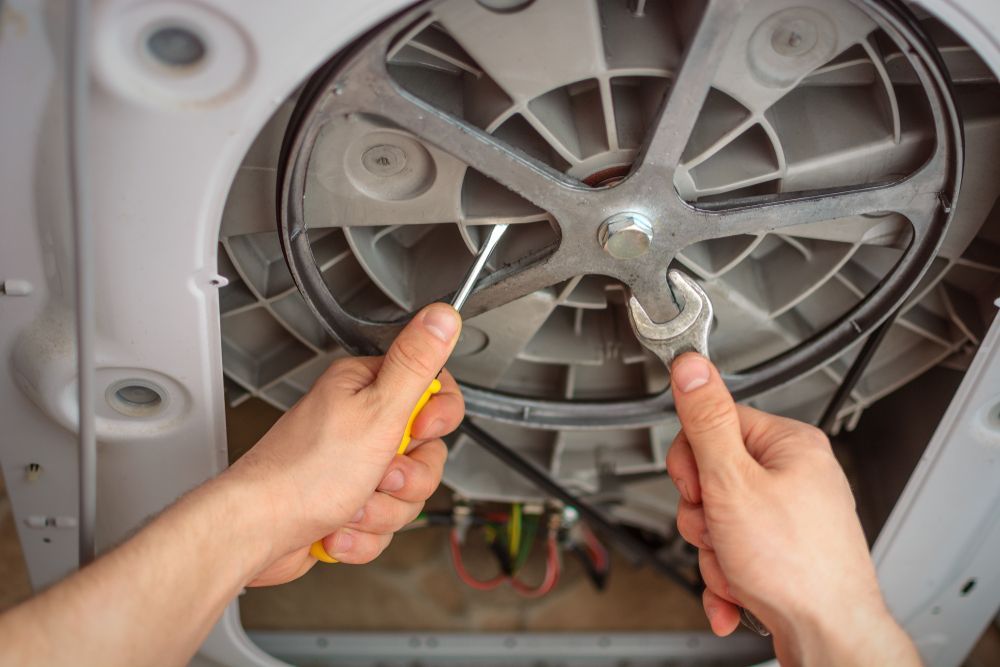
Diagnosing a washer or dryer correctly requires testing across the full operational sequence rather than stopping at the first component that appears suspect. For washers, that means checking lid or door switch function, water inlet valve operation, motor coupling or belt condition, pump function, and control board signal output depending on the failure pattern. For dryers, the evaluation covers thermal fuse condition, heating element continuity, cycling thermostat function, motor operation, and venting airflow measured at the exhaust point. Skipping steps in that sequence is how incorrect diagnoses happen—and how parts get replaced without resolving the actual fault.
Once a repair is completed, the observable changes are direct: a washer that was not draining will empty fully and complete the spin cycle, leaving clothes at the expected moisture level before transfer to the dryer. A dryer that was not heating will reach and hold the temperature needed to dry a standard load within the cycle time the unit was designed for. Appliance Pro documents what was found during diagnosis and what was repaired, so you understand exactly what failed and why.
Washer and dryer repair through Appliance Pro covers both top-load and front-load washer configurations and gas or electric dryer types within confirmed service capability. Gas dryer igniter systems, valve coils, and flame sensor components are evaluated separately from electric heating circuits and require that the technician know the fuel type in advance. Providing that information when scheduling allows the correct diagnostic tools and parts to be staged before the appointment, which reduces the likelihood of a return visit for a part that could have been brought on the first call.
Answers to Frequent Washer and Dryer Questions
Laundry appliance failures generate consistent questions about cause, repair scope, and what to expect from a service visit. The answers below reflect what households in the Victoria and the crossroads area most commonly ask when a washer or dryer stops operating correctly.
How does a technician determine whether a washer problem is mechanical or electronic?
The diagnostic process includes testing the control board's output signals against the expected sequence for each cycle stage, then confirming whether the motor, pump, and valve components respond correctly—if signals are present but components do not respond, the fault is mechanical; if signals are absent, the fault is in the control circuit.
Why does a front-load washer sometimes stop mid-cycle with the door locked?
Front-load washers with water remaining in the drum will keep the door locked as a safety function; the underlying cause is typically a drain pump failure, a clogged pump filter—which on many models is accessible behind a small access panel at the base—or a failed door latch sensor.
What causes a dryer to run a full cycle but leave clothes damp?
In Victoria's climate, a partially restricted exhaust vent is a common contributing factor, but insufficient heat output from a failed thermal fuse or cycling thermostat is the most frequent mechanical cause and is diagnosed by testing component continuity with a multimeter.
When is dryer vent cleaning part of the service versus a separate task?
Vent condition is assessed during the diagnosis process, and if restriction is identified as a contributing factor to the dryer's performance problem, clearing the vent is addressed as part of resolving the root cause rather than scheduled separately.
What model information should I provide when scheduling washer or dryer repair?
The brand name, model number from the appliance label, fuel type for dryers, and a clear description of what the machine does or does not do during operation are the details that allow Appliance Pro to prepare accurately for the service call.
Appliance Pro works with households across Victoria and the surrounding Crossroads area on washer and dryer repairs as part of a broader major-appliance service capability. Provide your appliance details when you call so the right diagnostic preparation can be made before your appointment.